Episode Transcript
[00:00:01] Speaker A: Hello, I'm Jeremy Rivera, your unscripted small business podcast host. I'm here with Knight Lancaster, a Nashville entrepreneur, and he's going to introduce himself and tell us why we should trust him as an industry professional.
[00:00:19] Speaker B: Appreciate you having me on, Jeremy.
My angle on this is I'm Bo's an attorney and a CPA and have an accounting practice that heavily focuses on accounting and financial operations for law firms and for other services businesses.
And I also have a law firm so that, you know, I can hopefully be the one stop shop for small business owners.
[00:00:51] Speaker A: What is it about those two professions that attracted you originally? Is that a continuation of where you started your education or were there pivots along the way? What led to law and accounting?
[00:01:05] Speaker B: I'd say it really came from, from my father.
I did not always have a grand plan to go to law school, but I was just trying to get the most out of my education and didn't, didn't care to be an accountant per se, but it was the language of business, so that was, that was the focus and I just kind of kept going.
[00:01:34] Speaker A: When you're consulting with people for their businesses, what's the biggest mistake that you've been seeing recently in the past couple years?
[00:01:48] Speaker B: Say that with all the advancements in technology and AI, it is trying to plug in some of those tools, tools on the accounting side, for example, with inaccurate fundamental data. And so you just get really accelerated inaccurate information.
[00:02:13] Speaker A: Because if you are pulling the wrong date range, the hypothesis that the machine learning is trying to pull out of it is going to be the wrong conclusion.
[00:02:25] Speaker B: Right? Right. So if it's, say you run a lot of Google Ads or, you know, whatever your channel is and you're trying to figure out, hey, how is that performing?
If how that money's been spent is in the same bucket as everything else, or it's categorized differently throughout, you know, the data for the most part is still rules based, so it's, it's just pulling from the nearest endpoint. So if the prior endpoint's wrong, it just carries the wrong information forward.
[00:03:01] Speaker A: I'm curious, I had a previous guest and I'll ask you later what your question is for other professionals, but his question is right up your alley. He wanted to know what are the most successful cash flow models that you've seen businesses use in the past couple of years for success?
[00:03:24] Speaker B: I would say.
It starts with fundamentally understanding how quickly your cash conversion cycle is. You know, if I get a new if for however many leads I have, whatever my sample size is, if from the first point of contact to me receiving funds, how long that period is, that's the piece of, I don't know.
So it's fundamentally knowing that then it's knowing how much a lead cost and then it's knowing how much your input costs are. If you're a really, if you're a services businesses, it's wages and if you're a manufacturer, widget maker, it's how much does your product cost.
[00:04:15] Speaker A: So when it sounds to me like with your consulting on that side, you're really clued in and tied into a lot of the marketing information and a lot of the marketing data for it. When you're doing your consultations, like what's the scope of information that you're, you're trying to understand and graphs so that you can do your job exactly right.
[00:04:42] Speaker B: So for, for a long time most, most businesses have kind of looked away from any type of paid marketing. You know, it was very much a pillar of the community type setup.
So one, making sure it's something that they're open to and really understand how it, how it works.
The next piece is how are people paid?
Right.
You know, in my industry, a lot of my clients are in, it is based on how much money they bring in the door as a, as a revenue generator. So if all of a sudden, you know, Google Ads or meta ads are bringing in significant money each month, it's the question of who gets credit for bringing that money in.
That, that's the first place I start to see everybody kind of everybody's ears perk up a bit to say, okay, well yeah, this is, this is important.
But that's, that's normally what I'm gauging. And then there, most don't have the infrastructure to track incoming leads, attribute the, you know, really the source of the lead. So from there it's saying, are you, are you willing to have that structure set up?
[00:06:16] Speaker A: That makes sense because if you're trying to make the business decision but you're starting at the, you're not able to attribute, you just know out of the stuff, all of the stuff that I've done, I've gotten a lead and you know, that's led to this many closes. That is one piece of business information. But it's really kind of lacking of direction of how to gain more. Is it, you know, doing more charity events? Is it, you know, cranking up the ad budget on social? Is it investing more in SEO? Is it trying to optimize and try to squeeze anything out of the new AI? Visibility bucket without attribution.
You're kind of hoping that you are growing in the right direction.
[00:07:05] Speaker B: Absolutely.
That's where you know, the data really matters.
It's some. And I think that's where you start to get to a point where I feel like a lot of people will lean into it at first because they feel like they're supposed to and then there's no real tracking or they're, they're just doing it because they feel like that's what they need to be doing. But.
And so their normal comp model will still drive heavy on referrals. And then I see other groups that will see the data after six months and say, I wish, I wish we had tripled how much we were going to spend on this and here's how much we're going to feed each month and with what we're getting out of it. We even know within Google Ads or within whatever our channel is where to even focus even more.
[00:08:05] Speaker A: Yeah, it's the problem of if you are, you know, trying to like even and distribute your budget across all of these channels, then you might be missing the mark where one of those channels is converting at 3 or 4x of the others. It's just you're not putting enough input and you're not willing to shift it around. If you can't attribute it, then you're not going and be able to make the right judgment call.
[00:08:32] Speaker B: Right, right. And that's, you know, take the, the Bart Durhams of the world that have billboards everywhere and they're on the side of every bus.
That's a, a different animal than most clients who are saying, hey, somebody was looking for estate planning and they saw my ad and they signed up. It's, it's, it's normally much more targeted.
[00:08:59] Speaker A: Tell me about the legal side.
How does that tend to play out? Is there a specific type of case that you're working in? Is there a field of regulation that you're specialized in? Like what type of law do you usually end up practicing?
[00:09:18] Speaker B: Sure.
So most, it's like most things where you cannot get super technical without a good fundamental understanding and foundation.
So my start was in corporate law and tax and from there sort of really dove into the tax planning, but also your small business M and A and working both, you know, buy and sell side deals was, was pretty heavy.
Learned a, learned a lot. Worked at a great, great firm.
And I, I would say that, you know, Tennessee is a bit of a unique state and in how they operate, but as far as kind of the Overlap.
The, the theme has been what I've tried to solve, which is people end up having to listen to either their attorney or their accountant because they're normally saying opposite things and frankly, a lot of times don't have a huge incentive to work together.
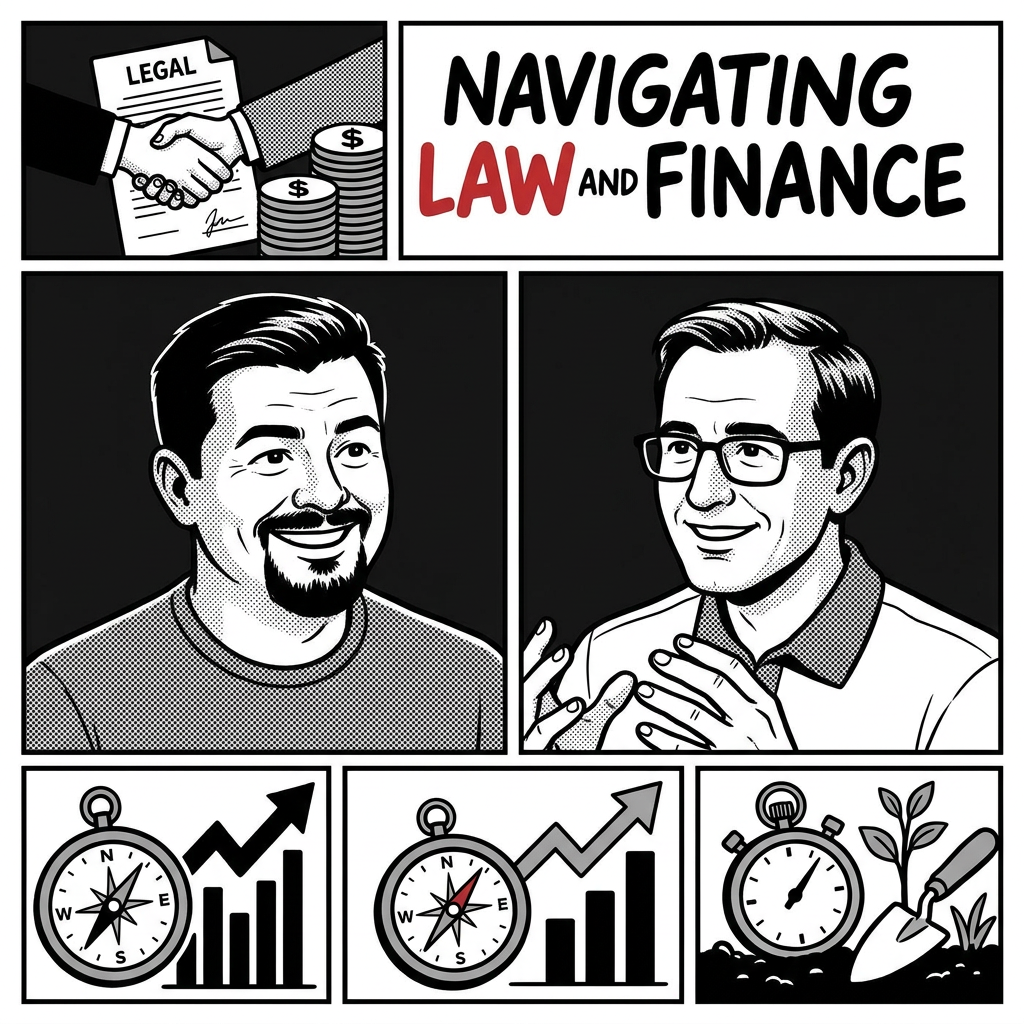
They're just both kind of running their own paths. And so I've been, my goal has been to kind of bridge that gap of saying, you know, it's just me on holding both licenses, but, you know, I, you know, just turn the hat around and say, you know, on my, on the, on the legal side, yes. Here's the thing you need to think about. On the, on the accounting, business, tax side, here's the piece you need to think about. So the answer is neither of these. It's kind of this spot here in the middle that's pretty balanced.
[00:11:01] Speaker A: That makes sense. When you've got so many different layers of regulation for different industries impacting investment decisions and impacting, you know, structural decisions, what are some of the most surprising, you know, challenges that regulations have caused that you've had to iron out?
Dealing with.
[00:11:34] Speaker B: On the legal side, I would say a big one is dealing with franchises.
I've represented a number of groups that have bought and sold franchises, and I've.
Where effectively the corporate franchisor has to sign off on any transaction. And I've dealt with some that were great, but I've dealt with some that just were really difficult to deal with. And it wasn't my clients or the, you know, other clients fault. It was, you know, basically the, the corporate franchise group that was difficult.
So that's, that's probably been one of the bigger ones. And then in, in the same vein, it's.
Anytime you're having to have a third party sign off on something, lending's a big deal.
All those areas you just, you kind of get into a bunch of red tape where party that has to sign off maybe doesn't really make any more or less money by signing off. So you just have to make it so easy for them.
[00:12:48] Speaker A: That makes sense. I'm curious. On the legal side of things, as we talked about, kind of one of the challenges of AI cropping up within the finance side, I have seen crop up news stories here. A judge slapping down an attorney, attorney here and there, a couple of national cases now with the, the DOJ having been discovered of submitting briefs that have fake citations.
Is that just carelessness with the tools, a misunderstanding of the capabilities or the liabilities and somebody just plugging stuff in where it doesn't belong or is this just a potential danger that has to be, you know, eagle hocked? Every time that AI is brought into the loop in the legal side,
[00:13:45] Speaker B: every time I answer this question, I think about what's going to happen down the road. But I really think the core issue, and I use all the same tools, so I really think the core issue, from the smallest firms to the biggest firms is the same, which is rare. But I think the biggest issue is they have halfway leaned into the process.
And so what that ends up being is they will use, you know, whatever AI platforms their firm uses, they will use those midstream in a workflow, or it's an option to use it, and there's, for whatever reason, not that last check at the end. You know, maybe we're going through six, six rounds of edits internally and when we went through to make our, you know, fifth round, we for some reason forgot to run it through the citation checker. That's, that is, I think, what happens in most platforms.
I don't think anybody's ever going to publicly come out and say, but ultimately it's the attorney on point.
The only end cap is all of these platforms have a way to go in because they were originally built around helping you find cases and summarize cases in your opposing clients or you're in opposing counsel's briefs. And so that software exists and works. And so it's, I really think the fundamental issue is it's, it's just a gap in the process. I don't really think the software is making a mistake or it's, they're using, you know, a legal specific tool, but then they're also sort of using ChatGPT on the side that's, you know, higher grade but has a higher risk of some of these issues.
[00:15:57] Speaker A: So then is it just, you know, when you have all of these tools and every single thing everywhere is getting AI slapped on it, that if you're not more aware of what these models do or how there's a, even a specialization, a need for it that you might just, you know, kind of misunderstand what, what even that term means because it's just kind of been, you know, like Microsoft added AI to this, you know, Gemini, you know, is cropping up in your email. And if you just look at it as, oh, it's an AI, then you might not truly understand the intent and capability and downside of any particular software.
[00:16:46] Speaker B: Yeah, I think that's the case. I know that a lot of time younger attorneys will, people will assume that that's the culprit. It's inexperienced. But if you look at most of these cases, they are senior attorneys, they're partner level attorneys in smaller firms normally, and they've, their firm just rolled out a product or they just started using a product. And you know, when somebody hands you a fact sheet that has 27 facts on them and you look at the first four or five and they look right and the rest of them sound good, you know, you, you can kind of go to sleep mentally reading through them. And I think it's just the kind of the bias of reading it and it sounding good and it's that last critical review and that, you know, that happens to us at all ages.
[00:17:48] Speaker A: It's the, it's when you hear something that sounds good. It's, it's the downside of having a LLM model whose basic premise is there. I'm here to help.
But that can be truly problematic in niches and industries and applications where you need a strong, strong negative bias. You need to be, you know, a judicial selector and you cannot, yes man or glad hand your way through it. You have to make true and hard decisions. And that's very true in law, that's very true in finance as well. So I, I could definitely see where these LLM applications start to go awry because they're just a little too friendly.
[00:18:36] Speaker B: And it's, it doesn't matter really what you type in. The old saying, you know, often wrong but never in doubt, you, you get a confident response. But the second you say, hey, I don't think that's right. I mean, you don't have to push that hard. You just have to say, hey, I, I don't think that's right. And it says, oh, you're right to push back there. And, and then it sort of goes down another lane and it's like, what do we, what are we doing?
So it's that.
But that initial output is always just confident, matter of fact, you know, end of discussion.
[00:19:15] Speaker A: It's like my talking to my dad, you know, very confidently telling me about the Mongol invasion in Eastern Europe in 1700 was the cause of the rise of Slobopadon Milosevic in the 1990s. I'm like, that sounded great. And then when I told my, my high school European ed teacher, he's like, no, that's, that there's like four things there in there that are true, but none of them actually connect to each other. I'm like, oh man, I wrote a whole paper based off of my dad's bogus information.
[00:19:49] Speaker B: Yep. Yeah, it's, it's crazy, crazy, crazy.
[00:19:56] Speaker A: Switching gears a little bit, I'm curious more about your business model. You know, ICP stands for Insane Clown Posse, but it also stands for ideal customer profile. So if you were, you know, casting your net into the waters and catching a particular audience, who do you think you've tailored your services down to? That's the right one.
[00:20:22] Speaker B: Sure.
So clients really come in through, through two initial pieces and then there can, can be some crossover. But most of the time if they come in through the CPA firm, we're heavy with, for starters, we're heavy with services businesses. We're most kind of concentrated, I would say with other law firms.
Reason being we.
I'm an attorney myself, I understand the accounting and the trust accounting. And then also it's the, it's understanding the software that attorneys have to use for billing and feels like every industry has some equivalent of that, but they just have a different, a different level.
So it's, that's, I'd say is the tightest industry.
And then if you back up a bit just to you know, say on the services side, it's, it's normally groups that are heavy on accounting and looking to pull what I would call like the accounting department as us to plug in, not a bookkeeper, not your fractional cfo, but really manage the financial ops process from the core fundamentals of the bookkeeping all the way through to work paying their bills for them, the money movement functions.
And then we will also do all their tax planning and tax work. That's the accounting firm, the law firm.
Our initial point of contact is usually small business owners where they're either coming in initially for business work, whether it's buying a business, selling a business, real estate related, you know, you're that main focus. So they're either coming in for that or estate planning.
And that's normally when we're having that conversation of okay, well this was, this was easy, this was good.
We'd like to deal with as few of people as possible.
So do you, are you taking other stuff on the accounting side? And so that a lot of times is the crossover that makes sense.
[00:22:55] Speaker A: I had an interview with Brandon Moon, who is basically the, you know, the mortician of the financial world. He works in all in end planning, like thinking about the exit of your business.
So for yourself, what's your end goal with what you're doing here? Is your end goal to, you know, keep growing, add more employees, add another division and grow?
Is this going to Be a continued lifestyle type business or you looking to expand? What, what's in your 5, 10 year business plan for yourself?
[00:23:38] Speaker B: Sure. So, so the goal is always to, to grow as long as we're not, you know, compromising quality.
That's where we're at. I don't really have any, any desire to, to sell.
You know, I've, I've worked in large firms and with great people, learned a ton.
But you know, I, I enjoy what I do and we're able just to, we're able to move quickly now, which is great. And so as far as an exit goes, last three generations of my family are entrepreneurs and none of them ever, ever sold either. So just I guess a bit of pride in that,
[00:24:32] Speaker A: stepping outside of business just for a minute.
What, what would you say you like to do? Like, you know, aside from books and law, what's, what are some of the adventures that you get on? What brings you joy?
[00:24:46] Speaker B: Sure.
Starting these two businesses was definitely a lot of work.
You're behind screens all day. All those are.
So I started about two and a half years ago, three years ago I started gardening, which I've never done before, but now we've got strawberry plants and we've got watermelon plants growing at the house now. So it's definitely been that just because it gets me outside and there's just something about working with your hands a bit that, that just helps and it's fun watching things grow.
[00:25:31] Speaker A: I, I definitely vibe with that. I had run into some dill seeds and threw them into the backyard a couple years ago and they sprouted and they grew and then I was using fresh dill all the time and so it's become a regular staple of our diet. Like sowing the seeds, growing, growing more dill each year.
Going to try, try my hand at making my own pickles this time. So.
[00:25:57] Speaker B: That's awesome.
[00:25:58] Speaker A: Definitely feely.
[00:26:00] Speaker B: Yeah.
[00:26:02] Speaker A: Last question.
What do you want to change in the world?
What would you like to influence outside of yourself? What do you think would be your greatest opportunity to contribute to a better world that we live in?
[00:26:27] Speaker B: That's a deep last question.
Yeah.
From middle Tennessee.
My family tradition roots back, has been in Tennessee since before it was a state. So.
All of the large businesses in Nashville are fantastic. But I grew up in a small town, grew up around small businesses, community owned businesses, and finding a way to help those businesses continue to thrive is, is, is big.
That's, I think that goes a long ways to, to just the community itself.
So I, I would say it's that, that element. And you know, I just, I enjoy building things. I enjoy watching my clients watching their businesses grow and that, that's fulfilling for them, fulfilling for me. So I think it's, it's those pieces of we're all really operating in a different, a bit different world than we ever have and figuring out how to, how to make it work.
[00:28:00] Speaker A: Definitely I gave you, I mentioned it earlier, but I'm going to give you an opportunity now because we're all small business owners. I've got my own small business. I consult people on SEO. I help build links.
As a small business owner, there are things that I know that I don't know. So this is your chance to think about for a second. What is a pain point that you've been experiencing as a small business owner? A knowledge gap of something you don't quite know, you haven't quite solved if you shout it out. I interview all kinds of other different founders. I interview SEOs.
So I'll take your question and pitch it to the right person and see if we can get you an answer that fills that need.
[00:28:59] Speaker B: I would say for me, it is, it is still something as fundamental as time management.
What I mean by that is I have kind of both the accounting firm and the law firm. And so, you know, sometimes in the same day, I'm sort of turning my hat around four different times.
And so figuring out as, as they, as they are both growing how to manage time from a. I know there are a million different ways to do it, but that's that time management and, and process management or probably the two biggest that I think I'll be working on my whole life.
[00:29:51] Speaker A: I definitely feel that one of the best insights I had was there's a Canadian lecturer who was talking about the problem of procrastination and the understanding of taking that problem and understanding that you're really borrowing time from your future self and being a bad debtor, you know, and not misstating the equation. And it tied back. And I just learned recently that an aspect of ADHD which I'm undiagnosed, but my wife says I definitely have it that misunderstanding or misallotment of estimate misestimation of time is actually a profile component of that. So to get you the right answer, this might be a little personal, but do you consider yourself anywhere on the autism or on the ADHD spectrum? Because that will change the guidance Because I have. I know my wife. I love her to death.
She has both autism and ADHD and those are in conflict with each other versus me. I'm just pretty much Mr. ADHD most of the time.
But I know that the advice for us and our non neurotypical brains is very different from what often will work for more neurotypical. So do you consider yourself anywhere within I would say.
[00:31:21] Speaker B: Am definitely the type that can go sort of in a hole working on something and then look up and go oh gee, it's been four hours and I don't hourly bill. So that's, you know, even that aside, it's like, yeah, we can just get in a, in a hole like that. So it definitely is just the hypertension blindness sometimes, but I guess it's good and bad.
So that's easily the thing for me.
[00:31:56] Speaker A: All right, I'll make sure to shop around and ask the next couple of founders and see if we can get some good time management advice for you as we kind of round out the interview here. Give a shout out again to your company names, the domain names and if there's a any particular social channels where you interact. If people have questions about you and your business, where can they find you?
[00:32:18] Speaker B: Sure. Sure. For the for the law firm it would just be Lancaster Law Us, we try to make it easy there to go in, connect with us, get directly on a calendar and meet with somebody face to face through a video call at least to understand what's going on. And then for the CPA firm it is Lancaster Firm.
And same same bit there, we try to make it easy to go ahead and get on a on a schedule, eliminate the phone tag a bit.
So.
[00:32:51] Speaker A: Well, I definitely appreciate your insights and thanks so much for your time.
[00:32:55] Speaker B: Thank you so much. Appreciate it.
[00:33:05] Speaker A: And we are off the air.