Tom Malesic started EZMarketing thirty-five seconds after quitting a boss who refused a client he disagreed with. Twenty-nine years later he runs the opposite kind of company. This one is about culture, client concentration and when to fire a customer. Read the full written recap.
EZMarketing deliberately runs a large number of small customers rather than a handful of large ones. It is less efficient, and it is the reason the company survives losing anybody. His test is blunt: if your top five clients all left tomorrow, would anyone lose their job? For most small businesses the honest answer is yes, which means those five clients are quietly running the company.
A customer once made an employee cry. That customer is no longer a customer. The revenue is replaceable and the employee is not. He treats it as coaching first: customers get told when their behaviour is a problem, the same as staff do, and most of them adjust.
The team is fully remote across three countries, run on an EOS cadence. Weekly rhythm, clear numbers, and accountability that does not require anyone to be watched.
Each client gets its own trained agent, built on Hats.ai across roughly seventy models. The point is not speed. The agent holds the client’s voice and history more completely than any one account manager, and it does not leave. He also flags the session-recording and accessibility demand letters now landing in small-business inboxes.
EZMarketing is in Lancaster, Pennsylvania, and offers free website audits.

Jessica Malnik opens with the take that hybrid is not the safe compromise. It is the hardest model, because it stacks every hard part...
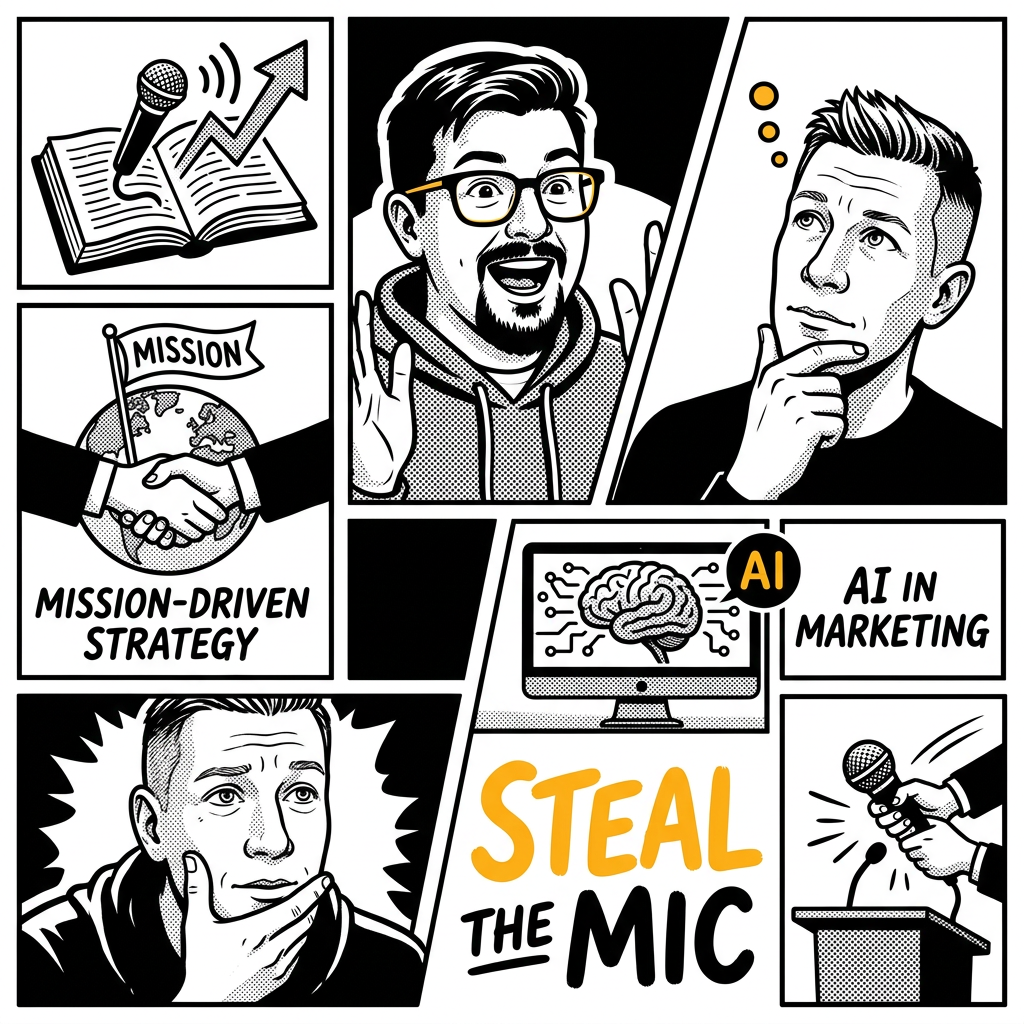
Bruce Ashford helps the people telling good stories steal the microphone. His firm works with nonprofit and small business chief executives on two problems:...
Business psychologist Dr. Julika “Jules” Novkova joins host Jeremy Rivera to unpack the human side of running a small business — why founders freeze,...