Episode Transcript
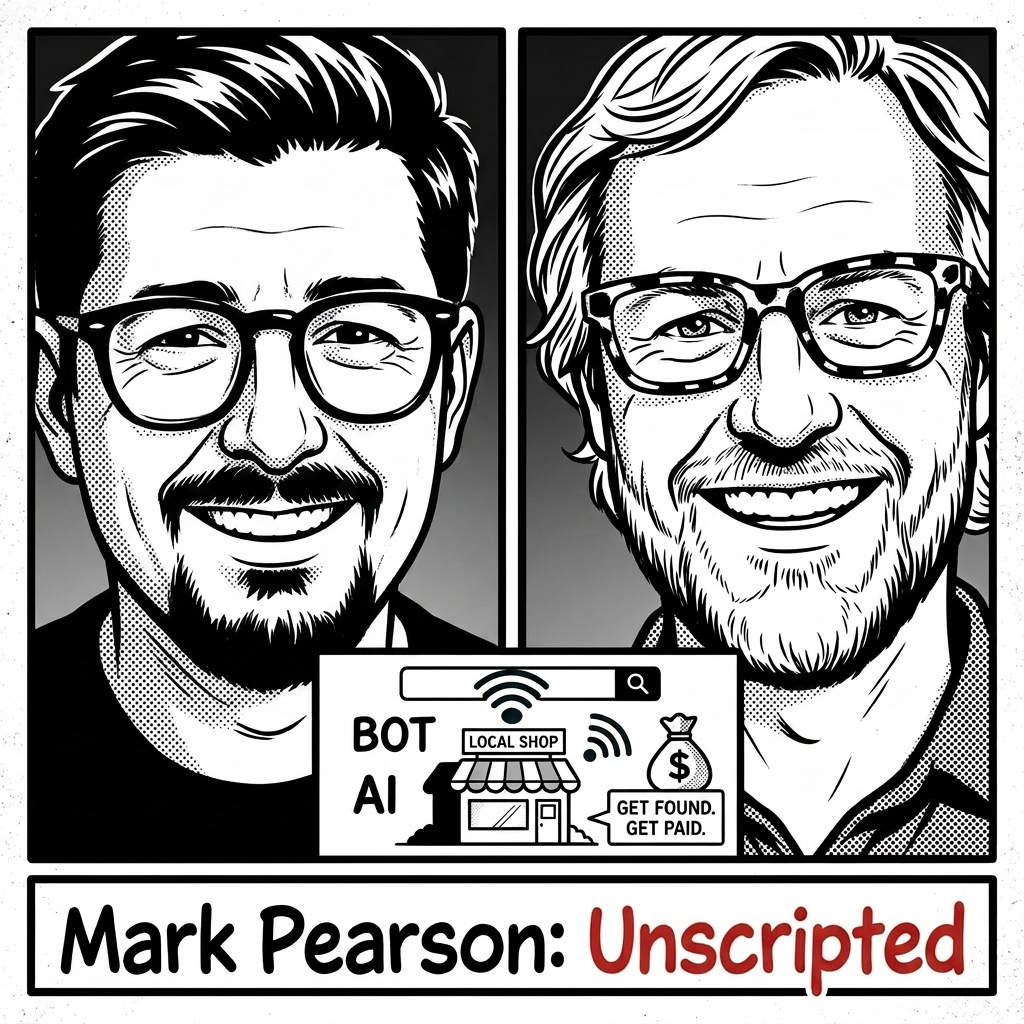
[00:00:00] Speaker A: Hello, I'm Jeremy Rivera, your unscripted podcast host. I'm here with Mark Pearson of Agent Buyable AI.
Why don't you give us an introduction to yourself? I'm guessing that the AI aspect of things is a little bit new.
So let's do the introduction through the lens of where you came from and your expertise and why people should trust you as you bring this AI offering to market.
[00:00:29] Speaker B: Yeah, thanks for that, Jeremy. Very good. Well, you know, it was about five years ago when I had some significant life changes going on for me. And it was a combination of COVID death of parents, moving, divorce and everything. It was like bam, bam, bam, hitting me.
So I said to myself, what can I do to work remotely? Right. It was all like, what can we do?
But also while making a big impact on people's lives.
And so that's when I found Tony Robbins in regards to actually going through his life coaching courses. So I had heard of him before. I'd even walked on fire with him before in the past.
But I got life coaching and then I drilled down further and pivoted into specifically business coaching because a lot of people were asking me about doing things for them, helping me with their business, but then some things they just wanted to be done for them. The classic done for you service, and that's about two year into the process is when AI came across my radar. Yeah. So although AI has been around for actually over 80 years, it came across my radar in that time period where people were going through my life or, sorry, my business coaching, but then saying, this is great, you've helped me a lot. And there's still this thing over here that I just want to be handled. And so AI and automations came across my radar and I decided to pivot even further into the AI consulting.
And so what that meant is that I would go into companies, I'd go into small to medium sized businesses and audit their business.
They knew they wanted some sort of AI to help them do something.
And those two things always fall into either increasing their profit or their revenue. And most of the time the things that move the needle the most are like the top line revenue. And so I did a lot of things that were helping companies along, getting clients.
And so for instance, I implemented voice AI receptionists, like, you know, for a, for a local lawyer and so forth. Right. And so those were very much in my wheelhouse to be able to employ that AI agent receptionist, where they're all always answering the phone, they're 24, seven, they're taking in the customers for the, in that case it was, you know, it's the lawyer and getting more clients because he doesn't need to personally field each of those phone calls or hire an actual individual to do those for him. And then I also, through the audits would do things in the back office a little bit more along the lines of profits.
So there's a car dealership up the, up the highway in Carlsbad, California.
They actually have seven car dealerships and in their back office. So in their operations I helped implement AI in their accounting department and so really streamlining things for their accounting team so that they're less in the weeds and the minutiae every day of just in that sort of time suck of things and they're being able to be more productive elsewhere. And so my business having pivoted into the AI consulting had really allowed me to help businesses determine what lever or levers could be pulled with AI to give them the desired outcome of, you know, X, Y or Z. And so the audit uncovered what would be most beneficial and also uncovers what takes the most time, what might cost the most. You know, sometimes it's just a complete off the shelf solution, like whatever, 49 bucks a month or something that can do that thing for them all the while to make sure that they're not getting sucked into the shiny object syndrome or the idea of like, oh, I just want the AI to do this for me. And then they go down the wormhole and it's like not productive. It's not, you know, really moving that needle for them in either, you know, again the, the revenue or the profits of things.
So there I was, Jeremy, gosh, probably now close to two months ago and you know, late at night there I am, YouTube University and I was, you know, watching Tom Bilyeu and his first kind of, I don't know, sharing with the world about agenta commerce. And I had no idea what that was. And it's basically where AI agents are able to complete transactions agent to agent.
And so it's because Stripe the payment platform and OpenAI formed a partnership in last September October, that large enterprise level retailers are able to sell agentically through agentic commerce. And I had the aha moment of where what PricewaterhouseCoopers was doing and is still doing. They're a huge consulting firm, international clients, international company themselves.
And where they're consulting on a very large enterprise level. I had the aha and I said with my personalized business coaching for small to medium sized businesses, I can adapt what they're doing for enterprise and helping with agentic commerce. And I can do it for, you know, again, the SMBs. Right. And so I took the idea of agentic commerce as one offer, but before that. So that's like the getting paid by AI agents and then before that is getting found.
Right. And so it's aeo, it's a I SEO. And so SEO has graduated into the gentic world as well.
And that is the AEO that is LLM visibility. And so my business coaching pivoted into AI consulting.
And although I'm still able to serve like in the wide general source through audits, I've really laser focused my business offering to small to medium sized businesses to A help them get found and B help them get paid by AI agents.
[00:07:51] Speaker A: What are some of the surprising niches where you're finding, you know, things that bees that can connect to that bee. Because I know I've talked to a number of different AI consultants of various stripes and different specialties. You're the first one that's talked about this particular aspect of accepting payment. I mean, I knew that it was coming and I knew that it was happening in some places. But can you give us a little bit of a better insight as to like where that's happening? Because I can't imagine like right now it's not.
Is it happening in like the home services niche of like you know, people delivering, you know, concrete walls or, or you know, doing home improvement types of things? Or is there a more specific type of niche or application where you're seeing the possibility of agents who have money to spend? That sounds weird to say, but I guess who have a wallet.
What is the offer? What are some of the type of offers you're seeing that they're seeking that they would, whatever their criteria is, choose to give your business money for.
[00:09:08] Speaker B: Yeah, 100%. So here in the US it's very much been rolled out again on that enterprise level. So where I'm seeing it and where you're talking about with contractors, Home Depot, Lowe's and then also think E commerce, okay, so think places like Etsy, think Wayfair, think major retailers like Coach, Urban Outfitters, Kate Spade, okay, Large retail giants like those, you could tell your AI agent to go and like buy the thing or you could brainstorm about ideas of gifts and then it might come up with something from one of those retailers.
Similarly, on Shopify, okay, people can make their storefronts be agentic ready, agentic commerce. And so the big payment processors like Visa, MasterCard, PayPal, et cetera, those are all there. And so Google with Shopify and OpenAI and Stripe together they've made these things called protocols. So the agentic commerce protocol is Stripes and OpenAI's Universal Commerce Protocol is Google's.
And so the, the, like the contractor down the street, you know, he's, he's not quite there yet. And so that's where I'm starting to bridge the gap. And that bridge can happen two ways.
One is the agent could quite simply book an appointment so that the contractor sends out a sales rep to, you know, measure their room for a remodel. Or the person wants to book a set of 10 chiropractic appointments with a chiropractor. And where like a human can go onto the human's website, the business's website and book appointments through it. Yeah, it's now making that website be agentic ready so that the agents can see the calendar and book on behalf of their human onto the human's calendar. But it's all done agentically. And so there's A, the booking component that could happen but then B the transaction can occur because the safety rails are in place, they're there by cryptographics and the, the basically the digital currency rails that have been put in place by places like Stripe so that there's protection and security for the consumer. So just like how you know you've got security around when you use your Visa card right now, those have been thought and put into place and exist right now. And so we in the US in this regard, Jeremy, are lagging China a bit because China's platform with Alibaba and Quinn, you can literally say I want to go on a vacation in two weeks I'm going to go to Shanghai.
You know, I want to spend whatever, no more than 5,000 bucks and go to certain sort of restaurants. And what it will do is it will plan your trip, it will book your means of travel. Trains, planes, automobiles, right, they're self driving byd cars. They'll, it'll, it'll research what is the weather going to do. And like it's probably going to rain. Do you own a raincoat? Do you want me to buy one for you? And so it can go out, it can, it can see everything in advance of where you're going. You could give it a little bit of guide work and then it comes back with more framing questions and then it can go out and it can birch purchase these things and the things being again products or services.
And so we're back in the U.S.
you know there's companies that are on Shopify that aren't E Commerce. You can actually, for that same chiropractor that I was talking about, they can productize their service. They take that 10 pack of, you know, back cracks and neck tweaks, et cetera that they want to sell and they put that up onto Shopify so that it can be purchased by people going to Shopify or agents. Right. Someone says, I'm looking for a chiropractor in San Diego.
And then their pricing and their catalog, their 10 pack is sitting there and can get purchased because of that.
[00:14:14] Speaker A: So it seems to me that some, some of the, the work here is probably in actually having that convert that productization, that business side conversation of, okay, yes, I know that you, you know, you have the, the greatest formulation for your asphalt driveway, you know, whatever it is. But we need to actually like not have you break this down. That cost in your head when somebody's calling and they tell you they need X amount of feet, a driveway to do it, you need to be able to like put that down, you know, that kind of pricing, slash product development, slash biz devs, that part of business planning, I guess.
[00:15:04] Speaker B: Yeah, yeah. So all of that data and that product catalog needs to get looked at and prioritized so that for that company it would be like, okay, what are say, like the top five services that they do? Right. And so they're like paving driveways, but maybe they also do sidewalks and then like pavers up to a front door. Those are like their ideal three things. And then so they productize all of that data they go through and they go through with what's called like schema. And you're just getting really clear on what the thing thing is the product is.
And then it's just like assigning SKUs to things and different pricing because of that, so that the agent is able to read it in their format really cleanly. And where we go onto websites and we want to see the thing and we read about it and all of the fluff that gets stripped out for the agents because the agents are just looking for a certain thing.
And then it does depend on certain descriptors, like whatever you may be for the asphalt. One, you're going to want to make sure that it can like withstand plowing in the winter. So it's, you know, rated for a certain weight level or something. I have no idea. Right. But like those details all get put into the product catalog.
And so yes, it's the, it's the combination of like the Engineering and the marketing, where those two roles, especially like in really big companies used to be different sort of separate positions. Now in large companies, they're talking much more when they're rolling all of this out and then down to, you know, smaller 10 individuals in a company or what have you.
Maybe it's one or two people that they're doing that same thing. They're thinking about it from both points of view.
So to be able to put it up there.
And the challenge is that I had this the other day, Jeremy, with a woman who, gosh, what does she do? Oh yeah, her company does home care for elderly. And so when people get old and get dementia, but they don't want to go into a retirement community, they want to live at home and they want to be taken care of. So they hire a home services company to come in and this woman's back. So she started this company because she went through things personally and she started this company, she's now the CEO, the founder of it and she's coming from like 40 years of experience in accounting. And so her challenge has been staying in that weeds of like the how tos, right? And the doing and like figuring it out how to put it all together.
So think like that marketing person with that engineer and how is it all going to work versus like where she, where I invited her to maintain her mindset is like just the doer, like knowing that that thing needs to get done because these days it's another marketing channel, right? Like having the AI be able to see and understand the engineering and the marketing side of whatever product or service.
Like it's. This is a whole new channel. Just like advertising is a channel or social media, right now, agentic services are a thing. And so having that business owner, that woman realize that, like for her, the challenge for her is to stay up as the director level of like, this is a project and it needs to be done over here and to not be sucked into the weeds of the how tos, right? To be able to delegate that that gets done. And so, you know, know that it can get done and know that you can h. Internally, you can research, you know, use GPT and everything, or hire professionals and agencies such as myself. So to be able to do that thing that's specific to whatever your business, you know, offers, whether it's a product or service.
[00:19:27] Speaker A: A couple of your descriptors, you know, seem to fall into the B2C category. I'm curious if you're selling oxygen monitors to vendors who need them for to make sure Their workers don't die when they're getting ice cream out of their trucks or whatever, you know, like in the B2B space. Is this a coming thing where if you're a manufacturer you selling to businesses that you also need to be thinking about 100%.
[00:20:00] Speaker B: Yeah. In fact the majority of the business, the majority of the transactions that are getting done and will get done will be smaller transactions that are exactly that they are business to business of the agents just doing a lot of those like reorders, monthly reorders on things and just in the kind of like general maintenance of business.
And so agents just handling those sort of things will become very, very common and they'll also be supported by the more like the customized route of whatever the product or services is that someone's looking for. And so there's just like there's a whole side of SEO on how people are ranking, how they're showing up. Right. And so there's a whole side of AEO ANSW engine optimization so that people are showing up in those LLM searches.
And then so it's like they, they want to be found. And like the woman that I was using with the example, like you know, she, she only wants to be found her, the way that she does her business is that she doesn't need or want the AI agent to basically like onboard or close a sale or whatever. She has a team for that. Like okay, great.
And, but being found is very important.
And so then it's just a matter of like where are companies in that flow of things again to go back to leverage the AI to best get the revenue or keep the profits and serve their company, serve their clients the best.
[00:21:55] Speaker A: Let's talk about either tactics or strategy for brand new brands.
[00:22:02] Speaker B: Okay.
[00:22:03] Speaker A: You know like I, it's funny because there is a press release for a company and I read through it and they forgot to actually say their name and they forgot to link to their site in the press release. In the press release from a very large, very large entity that was making mistake.
You'd think so, but no. Chevron's a pretty big company and they didn't mention their new project Kilby in their release.
So that type of thing. What level of over what level of interlap between LLM optimization SEO is really just remembering the third person that's always been in the room but probably not in the same conversation. The PR team, the PR person, the PR agency. How much of this optimization is just reminding those PR people when they're doing their job of just some you know, fundamental things like hey, let's include the name in the press release.
Let's make sure that that name, that branded name gets linked or you know, that link has relevant text and isn't just sales promotion stuff.
[00:23:23] Speaker B: Yeah, 100%. I mean the ball dropped there and they definitely missed the opportunity.
That's what it's all, it's like all of marketing is about being seen, being heard, it's getting attention. And so whether it's in press releases and being accurate with the brand and the, the product or service that they're wanting to spread, you know, or the case study, like whatever it is, right.
It's also that these AI agents, they're out there and they're crawling the web for us because you want to find something thing to do for you. And so the more places that your business can get seen and cited so that the AI is building up that credibility for you and then it's recommending it to, you know, their, to their human. Right. And so it's across the board, it's getting cited in press releases.
Blogging is especially more valuable, valuable these days because of just the, again the AI going out and looking for that credibility, like the consistency of blogging and the recent citations, just recency in general is really, really good for AI to build up that trust factor so that it's basically presenting a good case to its human for like, hey, look what I found over here, right?
It's being present in all of the socials or being deep in one. There's a school of thought of like, oh, you gotta be on every social. And it's like, well you don't necessarily. And in fact that might dilute your message as opposed to being really good at one and having good interactions with people and going deep and having someone just see you clearly there. So a little bit of a tangent, but you want to be present on social so that the AI is seeing you and even on various chats and so forth like Reddit. Right. And all of these areas like TikTok and YouTube so that the AI is not just seeing, it's not just ranking you like on Google because of a little bit of your own website optimization. It's also seeing in all of these other places as well that you're showing up.
And what's really like a kicker is that there the optimization for the AI searches are unique to each individual large language model.
[00:26:15] Speaker A: I was.
[00:26:17] Speaker B: So you're wanting to like rank on Google? Well, like you also want to show up on these other places like the Bings and you know, again, the TikToks or whatever.
So that with Gemini's unique algorithm and GPT's unique algorithm and perplexities and you know, the various LLMs each have their own way of going out and looking for these citations and trying to find the best roofing contractor, the best dentist or you know, the, the best hat to wear and you know, Whistler in the middle of winter, you know, this sort of stuff. And so having your business be spread across as many have as many stories so that the AI can verify and give that recommendation as a trusted credible source because it's seen your business over here and over here and over here and it's done that cross referencing and checking.
[00:27:21] Speaker A: Question, what are some of the surprising APIs that you've become aware about of different channels, of how LLMs, different LLMs are sucking in that data versus just primarily through search results which then you know, like you've got, I know that OpenAI for example, you know, they started with Bing, but now they obviously also are pretty much just a wrapper for Google and a lot of their results, you know, they're doing Bing Google queries and not just using Bing as a service search engine. I think it was perplexity, I think it was perplexity that was found to possibly be using Brave and its search results directly.
Because you talk about participating in these social channels and putting information out there. But it occurs to me that there's a difference between how that visibility is going to appear based off of whether those individual LLM tools or AI models are pulling that through an API partnership with Eventbrite which is informing them of, hey, there's these events that are happening in the city versus them doing a Google search and then seeing whatever event, date priority that Google is going to surface. Because that's like a secondary filter effect, right?
[00:28:56] Speaker B: Yeah, indeed. And that's again going back to where you want to put the news out in as many spots as you can so that it's able to see all of those things. And there's absolutely, I mean I remember just even a couple months ago people saying, oh my gosh, you know, there's going to be, you know, advertising on GPT, you know, that's going to come someday. And it's like it's here like there's advertising on GPT now. And so there's a degree of, you know, the money is talking, right, where like you can now buy ad space on GPT.
And so it's, it's just very important that you're Getting your message out across as many unique areas as possible so that it's cross referencing and it's, and it's, it's like, it's, it's either making your moat, if you want to say it that way, or it's like engraving the channel to your business, right? So that it's like collecting a little bit from this stream and then from this stream, but it's all coming down to kind of where your business is.
And so that it, it kind of doesn't matter what ends up being like the end of the day source at where you know, it's kind of doing its final recommendation. The point being that if you're getting your message out there accurately about what you do in these, all these different channels, then like you're going to be seen, you're going to be referenced. It's the whole idea of being you know, relevant and recent in things so that you can be trusted and then knowing that yeah, unfortunately like there's, it's, it's full on going back into like advertising dollars and then like behind the scenes with like the deep APIs and like who's going to get recommended on what. I mean that's going into like a whole area I don't know about. But I'm sure that there's you know, big money, big plays that are going in of like, you know, large corporations or something going into these big LLM, you know, frontier model companies and saying like we basically want to buy market share, right? And like be the recommended thing or what have you.
Way above my base, you know, like.
But yeah, I think it's just, you know, do do your thing and like shout to the world about it, you know, even if it's just like that testimonial, I mean this is, this is as simple, you know, for the mom and pop shop down the street as like increasing their Google business profile.
Like boom. For those local searches, just like work on that, right? Just get more profile reviews or again hire someone to do that for you so that you're not in the weeds on it. You know, get one of those things that's going to be on your counter that people can just scan easy so you make it easy so that over time these things get built up and so like like mom and pop, like real small local biz, just increase that and that's that one thing of being that frequency. Oh, here's another review. It's recent, right? And then as you grow you're gonna have more and more channels of opportunity to share about Things to try to get that market share.
[00:32:34] Speaker A: Jason Bernard of Kalicube, who was a previous guest, and Grant Simmons, who, who he started an SEO in 1998.
[00:32:43] Speaker B: No kidding.
[00:32:43] Speaker A: They defined it as, you know, building your entity and clarifying the signals that can be found online for your business to all be streamlined and to say exactly how you mean to define it. Because, you know, Jason gave the example of, you know, he produced a children's show and, you know, later on he came to realize, well, children's show is actually kind of broad. So I need to go back and say that it was a children's cartoon because the SERP type that's actually served up in Google is different for a children's show versus a children's cartoon. And his cartoon that he had published wasn't showing up for queries for it was like a blue dog cartoon or something like that. I forget the exact cartoon, but that was the example. And so he had to go back and revisit. Okay, how does Google know about the entity of that show? Oh, well, it's mostly like it's listed on IMDb, Wikipedia and one other major site like the original publisher site. So we asked the publisher to update it. He went to Wikipedia and asked for an edit and then getting that changed over on IMDb, that's just a database. And he claimed the profile and was able to update it. So that's kind of similar to a lot of the entity work that I've done as a SEO consultant, you know, working with a brand where Google didn't recognize that, hey, Save Fry Oil. Yeah, that's something you want to do as a verb. And that was the totality of the SERP is an AI overview. But hey, now there's a brand. There's a product that's called Save Fry Oil. It reduces your oil usage in your commercial kitchen.
Well, Google didn't understand that, that that was a product. And so. But largely because the company, it didn't even have an about page on the site. And so, like, how is Google supposed to know if you're not telling Google about your company? You know, and so that expands out now. Yeah, it's kind of, I think it's refreshing. There was a moment, I can recall, 2007, 2009 era where Google wasn't the only beast. You know, you could legitimately optimize for Yahoo and legitimately optimize for Microsoft. It wasn't called Bingyan. And there was altavista. There was hotbot. There was a time in SEO and marketing early on.
There was a more diverse market of these search engine results and it led to better best practices that would apply to multiple, slightly different models. And so you would find, you know, the main theme that ran across them and then you could dig into specifically on Google or whatever. But I, part of me is actually grateful for the breaking of the back of the, the Google total monopoly on search.
[00:35:45] Speaker B: Yeah.
Yeah, me too. A hundred percent.
And I know that they're coming back around with things. I know that they've got, they've got like so many different products and it's so distracting. I feel like sometimes.
Yeah, I mean, but data and big data, the fact that they've been in it for such a long time, like they're, they're a powerhouse. Absolutely to be reckoned with. And I just feel as though it's always important to. Yeah. You know, like, like you said with them, like share your entity's story. Right. And just like, like wherever it's going to be carried, then. Great. And be consistent.
Build up those testimonials, get those recommendations.
Share a story of how your product or service transformed someone's business or someone's life and it could be again, B2C. B2B. Either way, it's all about being seen and being heard. And yeah, it's a really exciting time to be in.
[00:36:55] Speaker A: My friend Matt Brooks defines it as training your worst customer support representative. If you just let these LLMs be the concierge for you without giving them any clue about what it is that you do, they're going to give wonky and incomplete answers. But if you take the time to define in a way that these tools can read it, hey, this is what we do. This is how we do it. This is how you can access it. And as you're pointing out, Al, this is how to buy it. And go ahead and buy it, Mr. Bot.
Buy it for, you know, I call it the human bot bot sandwich. You know, you've got your bot, your client's got their bot now.
And it's always been silly to me, you know, there's a lot of SEOs who are like, just bright for humans.
Well, yes and no, because you're writing for the human, but it's through a game of bot telephone, right?
And at the end of the day, like, yes, the other other human over here has to give the direction to clarify what the action is to their bot, which will talk to probably a third bot in the middle, which might be Google, it might be a different data source. But now, you know, as you're talking to Claude to help create content for your site.
Think about both of those aspects of it. Yes, it's yes, right for the human, but also right for the bot in language that the human is going to appreciate. So there's an aspect of that bot where they're people pleasers and so you have to trans.
It's not that you want to write in ones and zeros, it's that you also have to think about accessibility for these, you know, because a human can appreciate an image much more than a bot can and you can literally give direction or whatever in your image and you could make an entirely image based site. But that's going to be terrible for search engine results. It was terrible in the 2000s I had, I made one at my client's insistence.
Oh, I hate all of that text. Turn it into images. I'm like Google can. I can't find it.
Sign here to sign off of my liability because you're going to disappear from Google. No, do it. I know what I'm doing. Well, I made a website made completely of images and got the call two days later. Oh, my website's gone. Okay. What do you mean? Well, I went to Google and I can't see it anymore.
I told you this was going to happen.
So we have to keep in mind the, you know, the bot's ability to act on humans behalf entirely.
[00:39:47] Speaker B: Yeah. And an argument has been made that that's actually how the Internet was even first formulated and thought about was for the machine to machine engagements and come full circle. Now again more up on the enterprise level. Jeremy. But there's companies that are are redoing, let's say there's agencies that are redoing other companies websites to have a website that is solely for the bots.
Okay. So like where what I'm doing is about embedding onto the site the languaging like the JSON files. Right. The text, the LLM files, these things that are embedded but they still on that main website, they're not seen by the human AI or the human eye.
Okay. But they're seen by the AI and it's all sitting on that same URL. Okay. So the code is there in both forms, both for the human and the agent. But there's companies out there that are now being hired. There's agencies that are being hired to build like a parallel website that's entirely designed just for the bots.
[00:41:15] Speaker A: Controversial question.
And this comes from the SEO side of things.
[00:41:22] Speaker B: Sure.
[00:41:23] Speaker A: Backlinks fundamental in search engine optimization.
You know, Google uses them as you know, it's the page rank algorithm. It's what made Google different from AltaVista. You know, AltaVista was text only.
Would you say that the utility of backlinks at the moment in SEO is not for direct influence in anthropics model, in Claude, in GPT or Perplexity? Because I don't think I've seen studies that show, hey, they use them like PageRank right now, but that Google's and Bing's algorithms both leverage backlinks as proxies for authority and they influence your organic rankings for the content that shows up for those queries.
So because there's an aspect of that retrieval process, you've got your knowledge database of what it already knows and if it doesn't know, it goes and searches it. So your impact, your link building to improve your placement in that secondhand spot versus trying to. It doesn't have any impact on that primacy of being in Perplexity's knowledge base.
[00:42:40] Speaker B: Yeah, no, definitely hyper relevant. Even more so, I would say it's the fact that AEO being built on SEO, you still have those foundational things that need to occur.
And so I would say yeah, go all in on the backlinks and having them be a part of methodology, of build out so that the, in so that the LLMs are seeing you.
It's just AEO is an evolution of SEO and as you do.
It can be argued, Jeremy, that as you do really good SEO, you are doing aeo.
There's certainly some more unique things that are very specific so that the LLMs are seeing you as visible. Right. But there's a whole host of things that an efficient company in their SEO practices are enabling success for their, either their own company or, you know, if they're an agency, then the companies that they represent in showing up in the LLM searches.
[00:43:59] Speaker A: What's your hot take? Your most controversial thought about people's use of LLM tools right now?
[00:44:08] Speaker B: About what?
[00:44:09] Speaker A: People's use of LLMs. How are they using AI right now? And what's your most controversial take, take in that vein?
[00:44:17] Speaker B: Oh yeah. I mean my thing is just that the cognitive offloading that is, you know, it creates a precipice for people to be on. And so it's enabling people to do one of two things.
And I'm of the school of thought and practice, the creative side of things and then there's the other side where it's like the consumer side of things. Yeah. And so as people are relying on LLM and people, I think In Japan and so forth, they're marrying, they're literally getting married to their bots.
I think that their cognitive offloading and allowing so much ownership into the AI, either the AI that they're just talking to or an AI agent that they create and build up and has its own Persona.
It's a real thing.
I believe that it's, there's only going to be more and more of it, but I think that the, the challenge for people is going to be realizing that it's, it's still, it's a fantastic resource, but it's not like having.
You don't want to give it full agency. You don't want to just let it run your life. You don't want to be that, that consumer where you're getting like the big beer belly and it knows that you wanted a pizza and a Pepsi delivered. And so the AI sent this to you as you're watching your fifth rerun of your favorite movie, right? And instead you're using the AI to create so that the agency within you is enabling the ability to go out and use the knowledge of the AI to do whatever. Because I'm a firm believer that we are not like meant to be just solely like accountants or like we weren't made to be on this earth to be in an assembly line of, you know, cars, right? Like that we're all endowed by the creator, whatever you believe in, with so much more agency to be able to create in just such an empowering way that we're just coming to the tip of the iceberg now in our current state of things. And you can take a look back at Earth and the technologies that have been on the planet in the past, from the pyramids to all of the different, just huge cultures and civilizations that we've recently been learning about and are kind of literally surfacing and this sort of stuff.
And so that the AI that we're coming into contact with right now just affords us the availability of being incredible creators. And so that's, that's where I just always recommend people to like, use it a little bit at a time as, as much as they're comfortable with and then, but just don't rely on it. Don't have it be that cognitive offloading of just like, like, well, this is right, like it's not always right, right. And it's going to hallucinate and you know, do your own cross referencing it so that when it's giving you a response, yeah, it's done all of these citations and this sort of Stuff, but, like, you know, maybe that one source wasn't right. Think of it like reporters, right? You want to always check the sources of the reporting sort of thing. And so it's a fantastic tool to be able to create. And the challenge is just. Just not putting up your feet. It's easy to be like, oh, you know, put on my feet. But it's like, instead you've got that thing, you've got that knowledge, and then what do you go get to do with it?
[00:48:11] Speaker A: Yeah, it's why I've created the product offering, which, that I have, which is basically, you know, white label podcast as an SEO service of I help brands, you know, create a podcast, find a host, have unique, genuine conversations with other humans in a target industry or niche, and then turn that into content for their blog, content for their social media, build that audience, build that connection, and boost the signal. Because every conversation you have with somebody on a podcast, it multiplies your reach by their audience. So it's the best of outreach, human to human collaboration. And anything you do with SEO with AI tools beyond that is just multiplying the value and unlocking it. Because you had the human conversation, you had the exchange of knowledge between two human beings. And so I definitely agree that sitting on your laurels and putting in a prompt of, hey, what do you think is a good way to do?
AEO is a prompt that somebody could have put into Claude this morning, or they could have listened to this conversation and had a much richer dynamic, you know, thing based off of experiences. You know, LLMs only have stolen anecdotes. They don't have anecdotes or experiences of their own.
So. And they're very, actually very poor at usually at surfacing anecdotes. They have a hard time, you know, understanding the way that we present these stories as relevant to a point. And you'll notice that a lot of the processing of podcasts, they'll tend to skip over the stories that humans will listen to because we're cognitively wired to be storytellers.
[00:50:12] Speaker B: That's good insight from your behalf.
[00:50:14] Speaker A: Yeah, yeah, it's storytellers and story listeners. And so we don't need to explicitly be told what the action item is of the Boy who Cried Wolf. You can tell the story and it doesn't need to be summed up. And LLM lives off of that summary. But it's almost like it misses the point because the way that you structured that Boy who Cried Wolf, why, There's at least 15 blockbuster movies that you could basically say it's the boy who cried wolf. Right.
But it's a unique interpretation each time, and the interpretation itself is filtered through anecdote, experience and personal perspective.
[00:51:05] Speaker B: 100%. And that's where we draw meaning from and we draw relevancy. And we're able to transfer learning and do other things with that knowledge or that story and, you know, internalize it.
[00:51:21] Speaker A: Tell us where we can find you. If there's a social media platform you're optimizing or engaging in heavily right now, people want to have more of a conversation, or if they want to send their bot to your site and purchase your stuff, what are they looking for?
[00:51:37] Speaker B: Wonderful. Yeah. So to connect professionally, I'm on LinkedIn.
It's just my nail with my middle initial. So Mark with a K and then D for David and Pearson, P, E, A R, S, O, N. So Mark d, Pearson on LinkedIn. LinkedIn.
And yeah. And then Agent Buyable B U, Y A B, L E. Agent Buyable AI to learn all about how to use AI so that you're getting found.
And then if it's relevant to you, you can also have the AI purchase. So, yeah, get found, get chosen, get paid by AI.
[00:52:16] Speaker A: Nice tagline. I appreciate you stopping by.
[00:52:20] Speaker B: Yes, sir. Thank you very much for having me, Jeremy. I really appreciate this.