[00:00:00] Speaker A: The stories aren't necessarily about us, so don't think you're talking about yourself. We are making the client the hero. Because in the end, if the client's the hero and we're showcasing all the challenges they went through, and then here's this big win, it means anybody else in that same situation feels like they can achieve it.
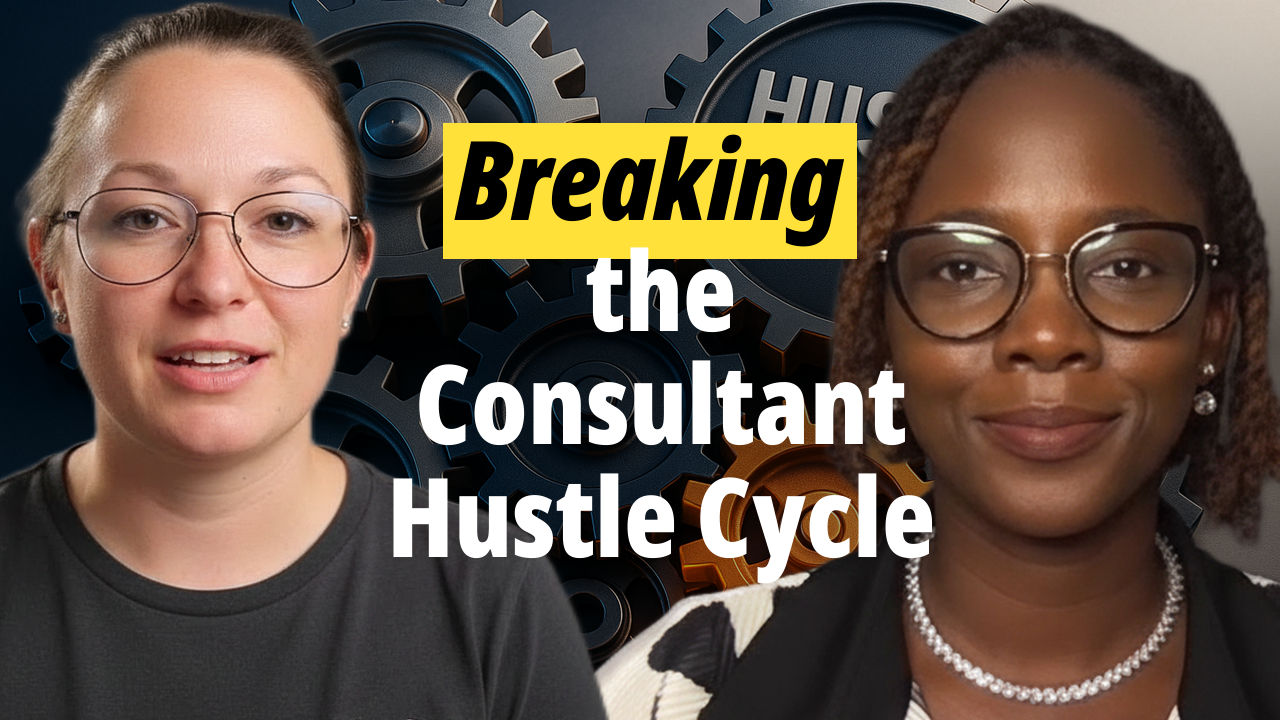
[00:00:20] Speaker B: Hello and welcome to another episode of Unscripted. I am Zanetta Tunique and Power.
And today I am having a very interesting conversation with Rachel Minion. Hello.
[00:00:32] Speaker A: Hi. Thank you so much for having me.
[00:00:34] Speaker B: Thank you for coming on. Now I can tell our listeners a little bit more about you, but I love to give you the mic and the floor to share more about you and your business.
[00:00:44] Speaker A: Thank you so much. So I am head rockstar at Rockstar and Moon. We are a revops organization that is built for consultants to really help them gain momentum because, quite frankly, everyone gets stuck in the mud. So what do we do? We help propel that.
[00:01:03] Speaker B: Nice. Which industry, when you speak of consultants, is there a key industry that you work within? Tell us more about that.
[00:01:11] Speaker A: We love operations consultants and management consultants, but we have definitely worked the gamut. As long as you're B2B, we are able to help you, and we have the formulas and the frameworks and the strategies for you.
[00:01:23] Speaker B: What are the common challenges that consultants find when it. When it comes to scaling their business?
[00:01:29] Speaker A: We call it a grind cycle that they get stuck in. It's crazy, right? You go, you go, you go, you're grinding and you get all these new prospects in the door and your pipeline fills up, and then you start booking clients.
So you move to client delivery, and you're working so hard to please that client, get them that win, do all the things that you know you can do, and then your pipeline's dry. So what do we do? We start it again and we go back to the beginning and it's this hustle cycle that doesn't need to happen and it doesn't need to be fully involved with you.
[00:02:01] Speaker B: Yes, that is very understandable and relatable, especially as a marketing professional and having been a solopreneur in many different industries. You're like, okay, cool, it's 20. 26 is coming. I need clients. Oh, my God. I have eight clients. Not got work to do. But how do I keep that pipeline sufficient and flowing so where there's a consistent and continuous flow of business? So I heard that you are launching a profit multiplier. Seems like a good solution to this. Can you tell us more about that.
[00:02:31] Speaker A: Absolutely. So what we've learned over the course of our tenure with clients is that every single client is amazing, but they are the best kept secret because nobody knows they're in that hustle cycle. They get stuck. And then what do you do once you finish with this client and you got this amazing win? You move on to go trying to find the next client versus taking that win, celebrating it and then building that case study around it. So we have put together an entire program that is based on fixing these problems as well as adding in automations as well as doing more with less so that consultants can find at least $100,000 in profit in their business.
So far since we've launched, quite frankly, we had a client just tell us that he is 42% year over year increase in revenue and we have a couple months left in the year.
I can't wait to see where that's going to end.
[00:03:30] Speaker B: Yeah, that's really awesome. So what are some of the heels that you coach your, your clients through to help them overcome some of these disadvantages or just inefficiencies in their workflow?
[00:03:46] Speaker A: I think like all of us, we all want it to be perfect. Right? But there's no such thing.
So until we have real world data, just get it live, just get momentum, just see how it's landing. Because if you wait until it's perfect, you've already missed the bus.
[00:04:03] Speaker B: Yeah, I've heard someone say, and this could be wrong, is perfect perfections the enemy have done.
Is that how that goes? I could have made that up, but it seems to work because I can certainly be an example of. Okay, let me review this one more time. One more time.
No, let me change it, let me change it back. Control Z. Okay, let me just start over and then I pass. And you're like, this really could have taken me originally to 15 minutes. So those bottlenecks are sometimes self induced by just perfectionism, which entrepreneurs are easily guilty of 100%.
[00:04:38] Speaker A: And I think the hardest part is we know we're doing it, we recognize the issue. But do we stop it?
No, never. Because you just want it. Right. And if you need to get momentum, you need to just get sales for the last quarter of the year. You're behind. You need to do these things.
Hustling more isn't going to get you there.
Right. Because if you're hustling on this one thing that has to be changed or this one way to go out to the market and you're just not testing it, what do you do? Versus the alternative of let's just get it out there, see what sells now, let's keep going, add that all into a workflow and a system, and then we play and we optimize.
[00:05:22] Speaker B: So how did you get started in this line of business? What is your expertise and how has your journey gotten you to being in the space where you have a passion for helping other consultants?
[00:05:33] Speaker A: I started in the world of printing and I was so fortunate because I had just started my parents company and within a few months my mom was actually diagnosed with breast cancer and I had the ability to kick my parents out of the business and go help run the organization and bring in the things that I had learned before and really be able to advance their business.
And it was really cool because I got thrown into technology. I was thrown into building out a ERP system. I've been thrown into building out technology in, like where you could order online, which was a new thing back then.
[00:06:14] Speaker B: Right.
[00:06:16] Speaker A: And how do you do things and how do you do workflows and all of those things? And it has been the best experience and the craziest experience all at once. Because as a small printing company, we did maybe 400 to 800 estimates a day, sometimes 1200 estimates a day, because they want all the different versions of everything.
And then I was in charge of production, so I was following all those things around. So you can imagine we did not have the operational efficiencies that anyone ever, but we got it in, out and done.
And I knew I had a passion for being able to get in front of something and just solve it. So moving forward, I moved in the world of marketing and got to experiment and play and grow and test.
There were so many opportunities, like being able to help contribute to the rebuild of the Verizon Wireless website from the ground up.
Being able to work at Ticketmaster and be able to run a marketing for a small division of it was incredible. But I realized I'm not a corporate person, not at all.
So that's where I'm taking all those larger corporate strategies and bringing them down into tangible things that any small business owner can do.
[00:07:33] Speaker B: That's really awesome.
Where are you based, Rachel?
[00:07:37] Speaker A: I am in Florida.
[00:07:39] Speaker B: All right, the Southeast. I'm in Atlanta. So it's always lovely just to hear where our experts live and if there's any localization that's, you know, super relevant, that our listeners know where they can find you. If they are also in Florida or in the Southeast, like we both are.
[00:07:56] Speaker A: And we're Northeast Florida, so we're probably not that far from you.
[00:08:00] Speaker B: Yeah, I'm in Atlanta so anytime you're over here, feel free to give me a shout. You know we love to always talk marketing and it's just a different conversation when you can talk to another marketer because half of it's going to be venting and the other half is just non stop ideation and cool stuff that we wish that we can do. So, so and I love what you mentioned around just identifying what type of person or worker or contributor you are. Like corporate's not for me. One of my previous guests was a second gen entrepreneur who's always known entrepreneurship and so it's very interesting to speak to others who have only known entrepreneurship and what that teaches you about being able to just be a self starter, find efficiencies and be able to just innovate at every turn and corner because everything's relying on you.
[00:08:54] Speaker A: I think the coolest part is so I am third generation entrepreneur and I didn't know this is what I wanted. I had, I was fortunate enough to create a side hustle after my parents company closed during the recession and that side hustle I had while I had full time jobs. So I was able to do all these things and grow my skill sets.
And one day during the pandemic we had at Ticketmaster were on a Zoom call and 80% of us are furloughed effective immediately. And I said wait a minute, I've been putting all my clients on hold and the reason I'm putting them on hold is because I just didn't have time to do it. I was traveling. So let's go full time, let's see what this becomes. And I didn't realize that as an entrepreneur you have the ability to build your business the way that you want.
You can build your dream business, do the things that you want to do, do what lights you on fire and build the team around that. And how do you want to deliver? That's up to you. How do you want to do these things? That's up to you. And it's such a cool experience.
[00:10:04] Speaker B: That's a great perspective around just the freedom to create. I think at the heart of every entrepreneur is a creative because it's a vision that you, that you have or had and it's up to you to figure out how to best make that come to life. And the, the dirty part of that is wearing each and every hat. But that's why there are people like you who can help step in to say okay, love that. Here's what we're going to do next.
That is a great resource to have. And so with many other people losing jobs to the various things that are happening in the marketplace, are you seeing uptick in individuals that want to get into consulting? And if so, what would you say to, you know, former corporate leaders who are thinking about making the leap to consulting?
[00:10:51] Speaker A: I think that there is a moment for every entrepreneur where you realize, oh, my God, it might be easier if I just had a job. And you have to be able to breathe through that.
It is a hard realization at times. Health insurance is a pain in the butt. Then you gotta go pay taxes and you gotta do these things. And then every. You're wearing every hat and you're doing all the things and you're the one responsible for. If you have a team, their families, or if you. It's just you, okay, how are we gonna get food on the table? And it's you who's gonna follow up and build that culture of your company of excellence.
So you've got to have the mindset that you can do this and you can do anything.
[00:11:35] Speaker B: Nice. What would you say are the top three success factors or even green flags that you see in the industry that would give you the indication that this person or individual is on the pathway to something big?
[00:11:51] Speaker A: You gotta talk about your success.
You may not be able to specify the company, but why can't you talk about, hey, I just helped the company sell more in one quarter after we worked with them than the entire year the year before. And being able to capitalize on your past wins because you put the work into delivery, you put the work into the systems to get this client from A to B. So why not talk about that transformation? And I think that is the ultimate key as the green flag is you want the those successes.
[00:12:27] Speaker B: Nice. So green flag is being able to talk more about yourself. It's. It's so empowering to do that and to learn.
Yes, you're doing a good job, to pat yourself on the back. There was a time in my career where I do resume and personal and professional branding for individuals. So I've seen hundreds of resumes. And in my conversations with these people, I'm like, so tell me about your job. Is there anything that you've done, really, that's been cool? I've innovated anything. And they are always talkative about initiatives. And so being able to translate that not only into your resume, but also your LinkedIn and your, your personal branding, but also your corporate values and creating a center of Excellence is a great way to attract energy that is similar to that and inbound clientele. You know, I've spent time being a consultant and I didn't have to spend a lot of work looking for clients. If you talk about yourself properly, create the right types of content and not dancing tiktoks and sometimes dancing tiktoks are great. I can't dance, so I'm a little jealous. That doesn't work for me.
[00:13:32] Speaker A: Well, the thing is like, if we think about it, the stories aren't necessarily about us. So don't think you're talking about yourself. We are making the client the hero because in the end, if the client's the hero and we're showcasing all the challenges they went through and then here's this big win, it means anybody else in that same situation feels like they can achieve it.
[00:13:55] Speaker B: So what are some big wins that you've had looking back on 2025 of this year? Share some of your big wins and what you're looking forward to for 2026.
[00:14:06] Speaker A: So we pulled some numbers for clients and right now we have a client of ours that is up 52% year over year in sales.
[00:14:14] Speaker B: Nice.
[00:14:15] Speaker A: Ludicrous. And they haven't had to hire anybody else because we put in automation systems for everything else and built out their tech.
So it's insane. And delivery can keep scaling up.
We have another client who I mentioned 42% year over year increase in revenue and the year's not done yet. I can't wait to fast forward to see the end of this year for them and how that's going to transform their lives.
And they didn't have to hire anyone either.
It's been really cool to watch these big jumps and having the right automations and things in place so that it helps them sustain and scale.
[00:14:55] Speaker B: Now let's talk a bit more about automations because sometimes you're only as good as the tools that you use. Without giving away too much of your special sauce, tell us more about Automations for those who might be just hearing about this for the first time and what they can actually do for your business and operations.
[00:15:13] Speaker A: So June sucked for me. It was terrible.
I lost my project manager who had been with us for three years.
She was the glue that held everything together, got everything moving, got the team organized, did all the things, all the admin work, all of it.
And I didn't know how I was going to rehire. What do you do? That's a key role.
How do you make anything work around that? And so my Husband challenged me and he said, what if you automate 80% of a role, could you do the other 20% that actually has value? I don't know. Let's try it.
So for three weeks, 3am to 7pm every day, seven days a week, I did all the things that I normally do in my organization. But I also took on her role and started automating piece by piece. I mapped out what needed to happen and I implemented it and I did it myself to just validate as I was going that these are things that would speed things up. So is it going to speed up production? Is it going to be more efficient? Is it going to do this is all the things. Because I knew what I expected and I rewrote all the product descriptions. I then rewrote all of our SOPs all the way to that we work. I changed it. So three weeks later fully launched it to my team and I immediately I'm done for dinner at 5, 5:30 at night.
I am working a normal schedule and I'm not up at three in the morning trying to do things her job and my job and how am I going to handle the stress of it? And if you can think about all the different pieces of admin that were done before and now, what can actually be automated? For example, I brought on a note taker to every single one of my calls previously.
Now I have the action items from that note taker create tasks in my system automatically.
I close out the things that aren't needed, I audit it and then I can just assign it out to the team members that are associated and they have the transcript and the video for the exact moment of reference of when that happens. So instead of me having to then go after a call, go hand write everything, get it together into the task, then go assign it out, I am now just getting myself out of the middle and making it much more efficient. So they're also hearing it from the client's mouth.
[00:17:34] Speaker B: I think that's a really good example to note, especially around note takers, even just specifically with that. You know, I worked with a team once that had just as many notetakers as there were people. And I got a bunch of different notes, some useful, some wasn't. But if there was a way to in this instance or in any instance, amalgamate those notes or have one primary notes, because I don't need everybody's note taking notes, one is fine.
And then have a shared document or space where we're seeing those outcomes so we're holding each other accountable. Is certainly ideal and that's the point of these tools. But if we are implementing things because it sounds cool, there's a free trial. This is my friend's startup now. You're all over the place. Start still, you're still busy and you have a bunch of logins to things that are not helping you.
So I really appreciate the way that you integrate yourself into the ground level of the business. To really point out, okay, this is what you can use and this is how that's going to help your business be more efficient.
[00:18:40] Speaker A: Thank you. I think the biggest key is just interconnectivity because when everything is a separate system, you then have to manually work to go put it all together.
And no one wants to do that.
[00:18:54] Speaker B: Yeah, that, that is a task in itself to where you end up, you know, kind of spinning your. Your wheels in mud, if you will.
So that's great. What are some of the things that you are looking to do with your program?
Profit multiplier. We mentioned the services. That is within that. But what is your big vision? If you were to say I want to help this many people or I know that there's a passion rooted in it. Tell us a little bit more about that.
[00:19:28] Speaker A: So as you can tell, I'm a girl who is the biggest fan of small business.
I grew up in it. It's who I've surrounded myself with. And we have a goal to help a hundred small businesses double by 2029.
[00:19:42] Speaker B: Nice.
[00:19:44] Speaker A: And we're on our path to do so. So that is the ultimate. And the reason why we've chosen this is because it doesn't just affect the business owner. Sure, the revenue is great.
But let's think about it for a minute. It affects their kids, it affects their community and it's that ripple effect. Right. You have the little League down the street, you have that. There's all these different nonprofits that can generate. There are the small little. It may be a girl Scout, but it may be something else, a small business down the street that they can help. And it's so much better than the big corporations who aren't necessarily giving back in that same way that's so personal and localized.
[00:20:27] Speaker B: We're going to get into some times very soon where your neighbor's business or the business on the other side of town, like you mentioned, hyper local interconnectivity and networking is going to be very, very important because there's.
That's just the way the market's trending. So I'm really glad that you highlighted that as well, because that's a thread of community that I'm looking to see be reestablished as we begin to figure out how to just use what's around us to grow what we have.
[00:21:02] Speaker A: And I think there's so many different ways that those small communities can band together to make anything happen. And we saw it across the pandemic. We've seen it in every different instance.
So I'm really excited to keep watching.
[00:21:17] Speaker B: This grow to seeing it grow too. And beyond just unprecedented times. Right. It shouldn't take unprecedented times for us to figure out how to, you know, unify our businesses beyond the lines, but make it more of a lifestyle and a new culture of business. And so you are leading the charge with that. So hats off to you and salute to you for everything that you're doing for yourself, your family, but also your clients. I'm very proud of you, Rachel.
[00:21:43] Speaker A: Congrats. Well, thank you. Now if we could just start a revolution that when somebody says that they're starting a business, that we have the same like baby shower for them that we would if they were expecting.
[00:21:54] Speaker B: Oh yeah, business. Baby shower is a great idea. Send me your Amazon list or your Zell. I got, you know, a little money on some flyers or some meta ads. That's a, that's a great way to really offer some of that collective support.
Now I'm an avid read, an avid reader. I have over 200 and something books at home and I like to share, I'd like to share with our listeners some of our guests favorite books. Do you have any good reads that you've read recently? Could be business related or personal.
[00:22:32] Speaker A: So recently and please laugh with me because just like everybody else, I find Hormozi's launches to be exciting and I love seeing the way that he tests and experiments. So it's the hundred million dollar money models, the hundred million dollar leads, right? Those excite me. And every time I listen to it, there's something else that ignites. Oh, you know, we should be doing this here or hey, we should do this here. And there's no shortage of ideas. And that is the current stack on the bookshelf.
[00:23:07] Speaker B: Nice. Listen, I know that everybody has their lane of things that they love to read, so I'm glad to hear that you've shared that one. And it's something I'm going to put on my Amazon list too. All right, well, as we end this episode of Unscripted, Rachel, can you tell the listeners where to find your business and anything about you? If you Want to share LinkedIn. Feel free to drop that as well.
[00:23:32] Speaker A: Awesome. You can connect with
[email protected] and you can find the profit multiplier on rockstarandmoon.com.
[00:23:41] Speaker B: All right, can you just tell us how to spell that one? Rockstar.
[00:23:45] Speaker A: It's rockstar with two Rs at the end. A, N D, moonmoon dot com. Because, of course, I'm a marketer. And so two Rs at the end made sense. And until I realized I had to say it all the time.
[00:23:59] Speaker B: And that's okay. You know, we love a little razzle dazzle here and there, and two hours just gives that extra edge. So thank you for, you know, being a little different. We love that.
[00:24:10] Speaker A: Well, thank you.
[00:24:11] Speaker B: All right, well, this has been another episode of Unscripted. I'm here with Rachel Minion, and have a great evening. Thank you.